
For Caregivers
Who is taking care of you?
Caregiving for someone you love can ask more of you than you ever imagined you could give
Maybe you're caring for a partner with cancer. A parent with dementia. A child with a chronic illness or disability. Someone recovering from a major surgery, accident or medical crisis. Or someone you love whose health has changed slowly, over years, until you can barely remember what life was like before caregiving became part of it.
You manage appointments. Medications. Meals. Insurance. Doctors. Emergencies. Decisions.
You notice the change in their breathing. You know which symptom means wait and which one means call. Your phone stays close. Part of you is always listening.
You may be doing all of this while working, parenting, managing a household and trying to maintain the rest of your life.
And somewhere along the way, your own body may have learned that it is never entirely off duty.
Cellular Healing is a place for you.
The first step is a private conversation with Nina.
You can love someone deeply and still be exhausted by what caring for them requires
Caregiving contains contradictions that don't always have an easy place to go.
You can be profoundly grateful that someone you love is still here and desperately tired of what it takes to care for them. You can want to help and resent that so much falls to you. You can be frightened about what happens next and tired of thinking about what happens next. You can know that you need rest and discover that when you finally have the opportunity, you can't actually relax.
Sometimes you've been the capable one for so long that other people stop asking how you're doing. Sometimes you stop asking.
There is always one more thing that needs your attention.
So you keep going.
Until you begin to wonder:
How long can I keep carrying this?
I know what it is to love someone and have their health become part of your daily life
I've spent much of my life on both sides of care.
I was nineteen when I was diagnosed with Myasthenia Gravis. Lupus and several other autoimmune diseases followed. By twenty-six, I was moving between a wheelchair and a bed. I know what it is to need other people. I know how much their care made possible for me.
And I have also been the person giving the care.
I've cared for people in my own family through major health issues. I know what it is to love someone and want to do everything you can for them. To pay attention. To show up. To carry practical responsibilities alongside fear, uncertainty, exhaustion and the rest of your life.
It is a labor of love. And I've learned that being supported in that labor matters. Not because support makes caregiving easy. It doesn't. And not because caring for yourself means you'll never become tired, frustrated, frightened or overwhelmed. But when you are supported, there can be more room for you to be present with the person you love—not only managing what needs to be done, but actually being with them.
You are part of the equation, too.
The quality of your life matters. The state of your body matters. Your capacity to receive care as well as give it matters.
You don't have to disappear in order to love someone well.
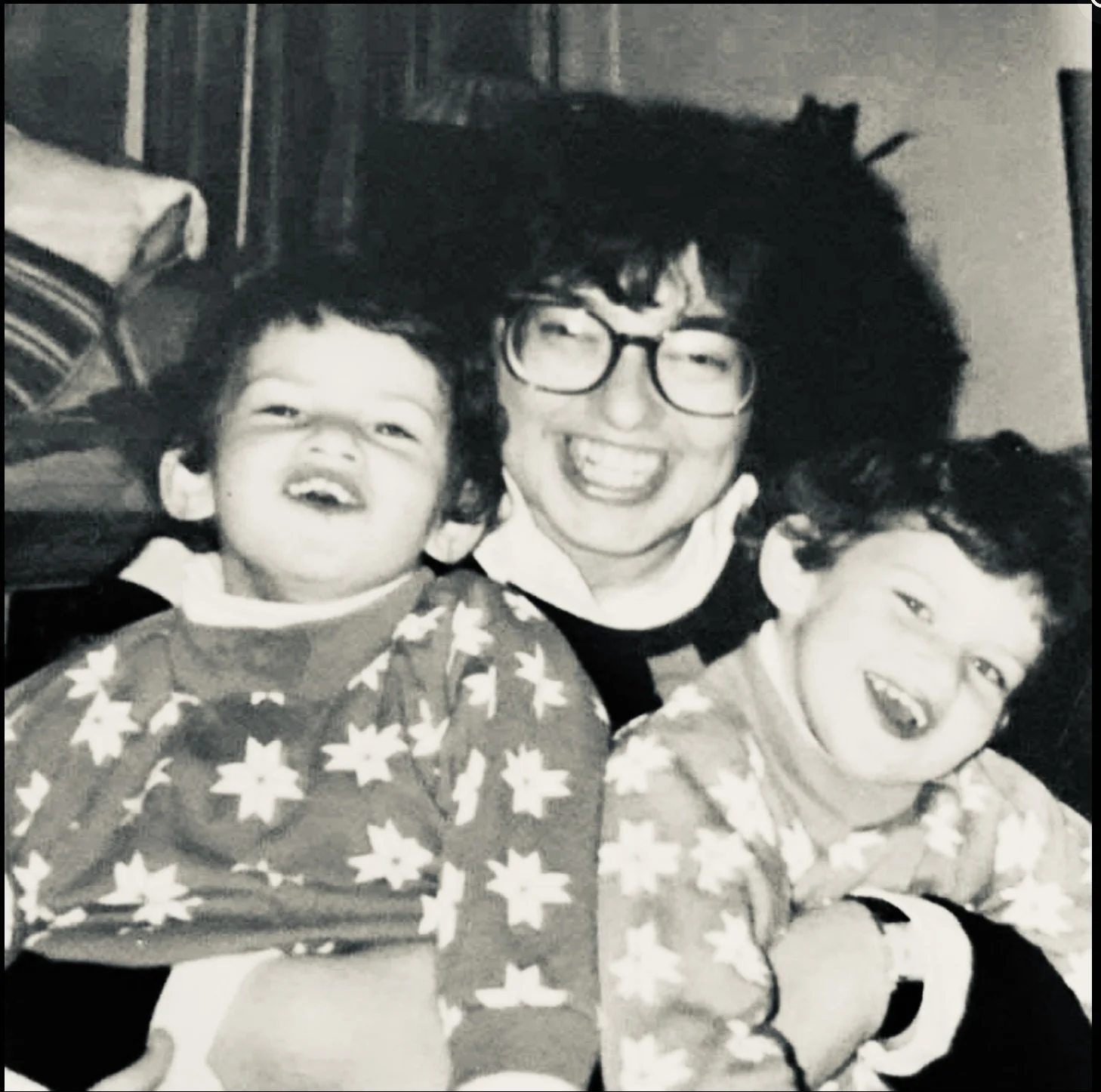
Your body has been doing its job
When someone you love is seriously or chronically ill, paying attention matters.
You learn to anticipate. To notice small changes. To respond quickly. To put your own needs aside because something more urgent is happening. You become very good at functioning when you're frightened, exhausted or uncertain.
Those responses aren't failures. They may be part of what has allowed you to do something extraordinarily difficult. But a body that practices vigilance over and over can become very good at vigilance.
You may notice that you're always braced for the phone to ring. That you wake at the smallest sound. That your mind runs through contingencies when you're supposed to be sleeping. That leaving the house makes you anxious. That someone else offering to help doesn't necessarily make your body relax.
Even during the good periods, part of you may be waiting for the next thing to happen.
I work with those patterns.
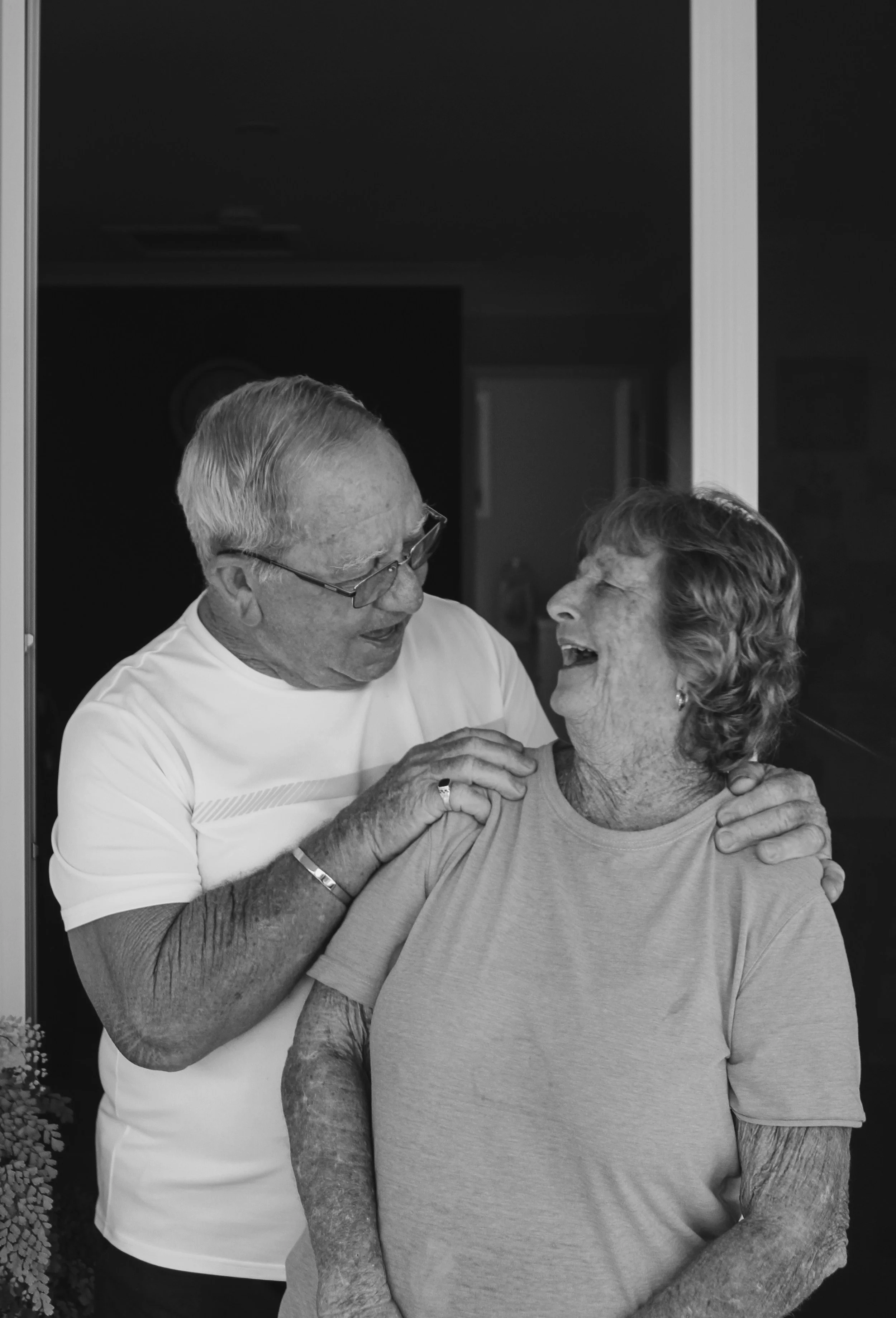
What is Cellular Healing?
Cellular Healing is a complementary mind-body practice that works with patterns your system has learned through experience.
During a session, I guide you into a deeply restful state where we can begin to notice what your system has learned and work with it differently. You are awake and aware throughout. You don't need to know how to meditate, clear your mind or think positively.
This isn't about convincing yourself that caregiving isn't difficult.
It isn't about becoming more patient, more selfless or better at carrying an impossible amount.
And it isn't about asking you to stop caring.
It's about creating room for your body to experience something besides always being the one on call.
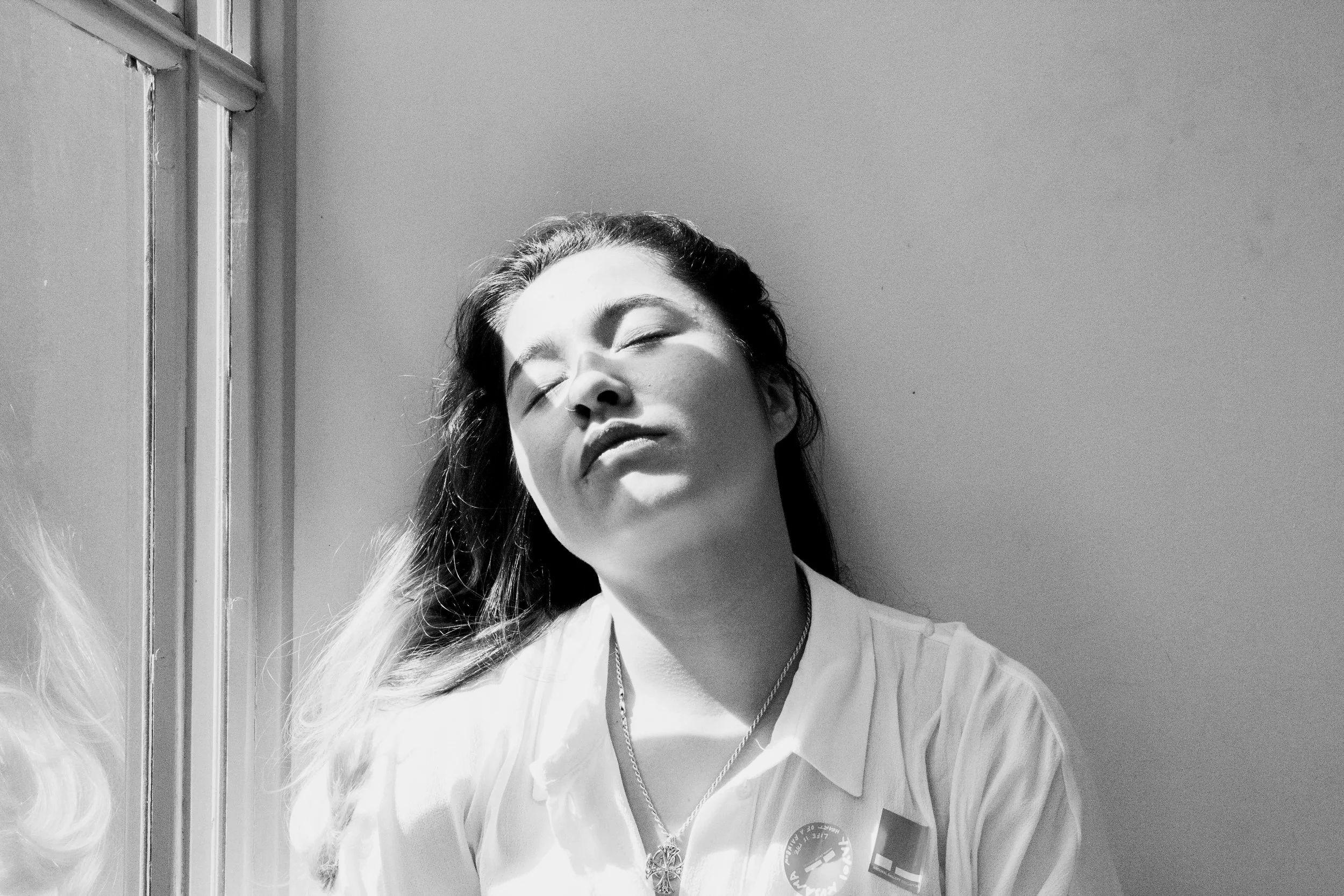
Rest isn't always as simple as getting a break
People tell caregivers to take care of themselves.
Get some sleep. Go for a walk. Ask for help. Take a weekend away.
Those things can matter enormously. And when they're available to you, I hope you take them. But sometimes the opportunity to rest arrives and your body doesn't come with you. You lie down and your mind keeps going. Someone else takes over and you continue checking your phone. You finally have an afternoon to yourself and can't figure out what you want to do with it. Or you feel guilty for enjoying it.
When you've spent months or years orienting around another person's needs, receiving care, experiencing pleasure and having needs of your own can begin to feel surprisingly unfamiliar.
You don't need another person telling you that you should take better care of yourself. You may need help remembering what it feels like to belong to yourself, too.
We begin with a conversation

Before we work together, I want to meet you.
Before we work together, I want to meet you.
We'll talk about the person you're caring for, what caregiving is asking of you, what you've noticed in your body and your life, and what you would like to experience differently.
You don't need to justify why you're tired. You don't need to prove that your situation is hard enough. And you don't need to arrive knowing exactly what you need.
I also want to understand whether I believe this work is appropriate for you. If I don't, I'll tell you.
If we decide together to continue, Cellular Healing begins with a series of four private, one-hour sessions on Zoom. The initial series is $1,800.
Together, we'll establish what you want to work toward. That becomes the focus of our work throughout the series.
But you don't need to decide any of that now.
The first step is simply a conversation.

FAQ
-
Cellular Healing is a complementary mind-body practice. It isn't psychotherapy, medical care or a caregiver support group, and it doesn't replace any of those things when they're needed.
Our work is focused on you and the patterns your system has developed while living through the demands of caregiving.
-
No.
For many caregivers, there isn't a clean “after.” Chronic illness can last for years, and acute illness may involve long periods of treatment, recovery and uncertainty.
We work with the life and body you have now.
-
You don't have to.
This work isn't based on eliminating the demands in your life. Your loved one may still need you. There may still be appointments, uncertainty, interrupted sleep and things you cannot control.
The question is whether everything inside you has to remain on high alert while you live it.
-
Then that can be part of what we notice.
When someone you love needs a great deal of care, your own needs can begin to feel less important—or even inappropriate.
They aren't.
Caring for yourself doesn't diminish your love for someone else.
-
That's not unusual.
Illness can bring many kinds of loss: plans that changed, roles that shifted, independence that disappeared, a relationship that isn't quite the one it used to be, or a future that suddenly looks different.
You don't have to decide whether what you're experiencing officially “counts” as grief before we can talk about it.
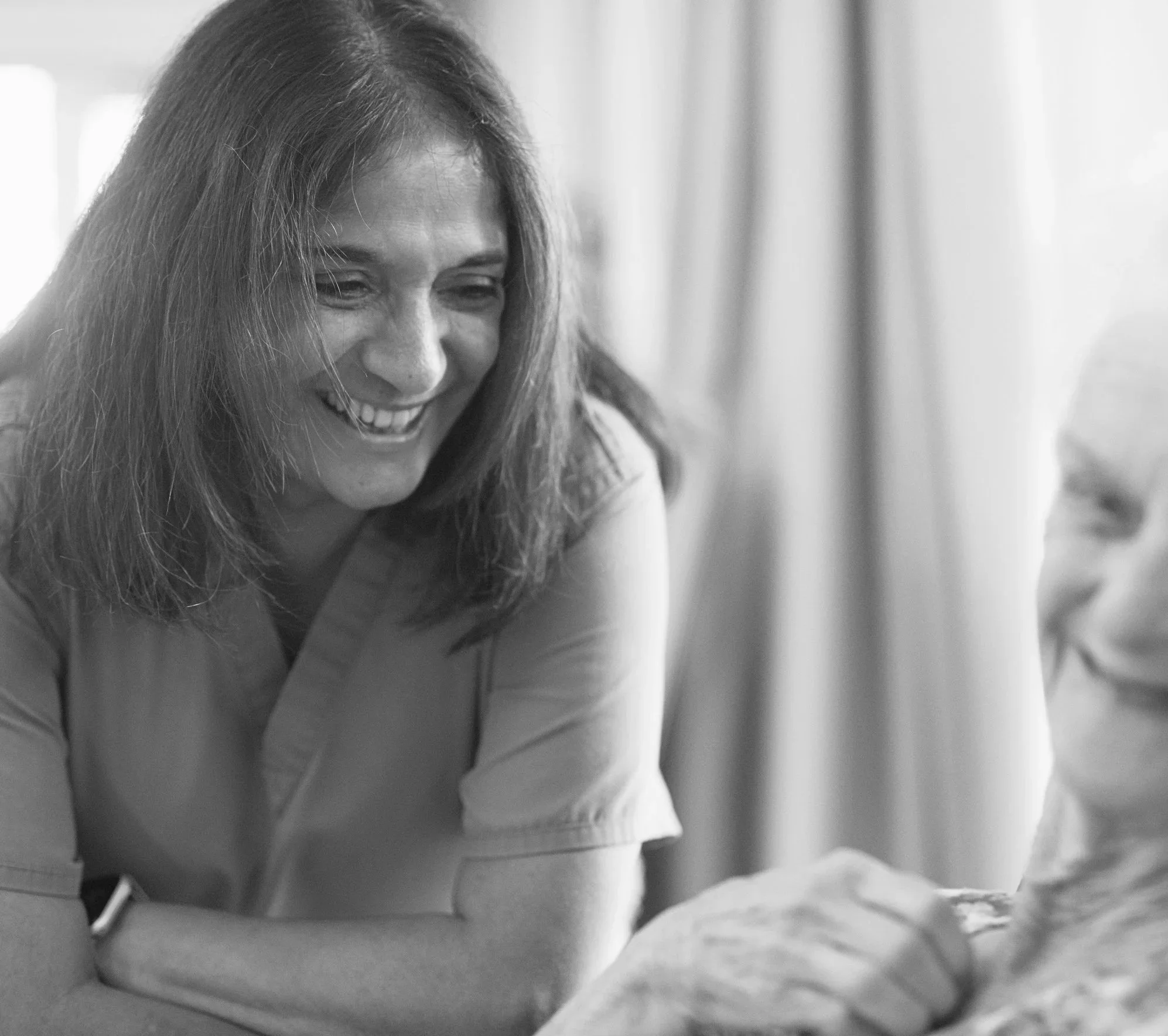
You are more than the person who holds everything together
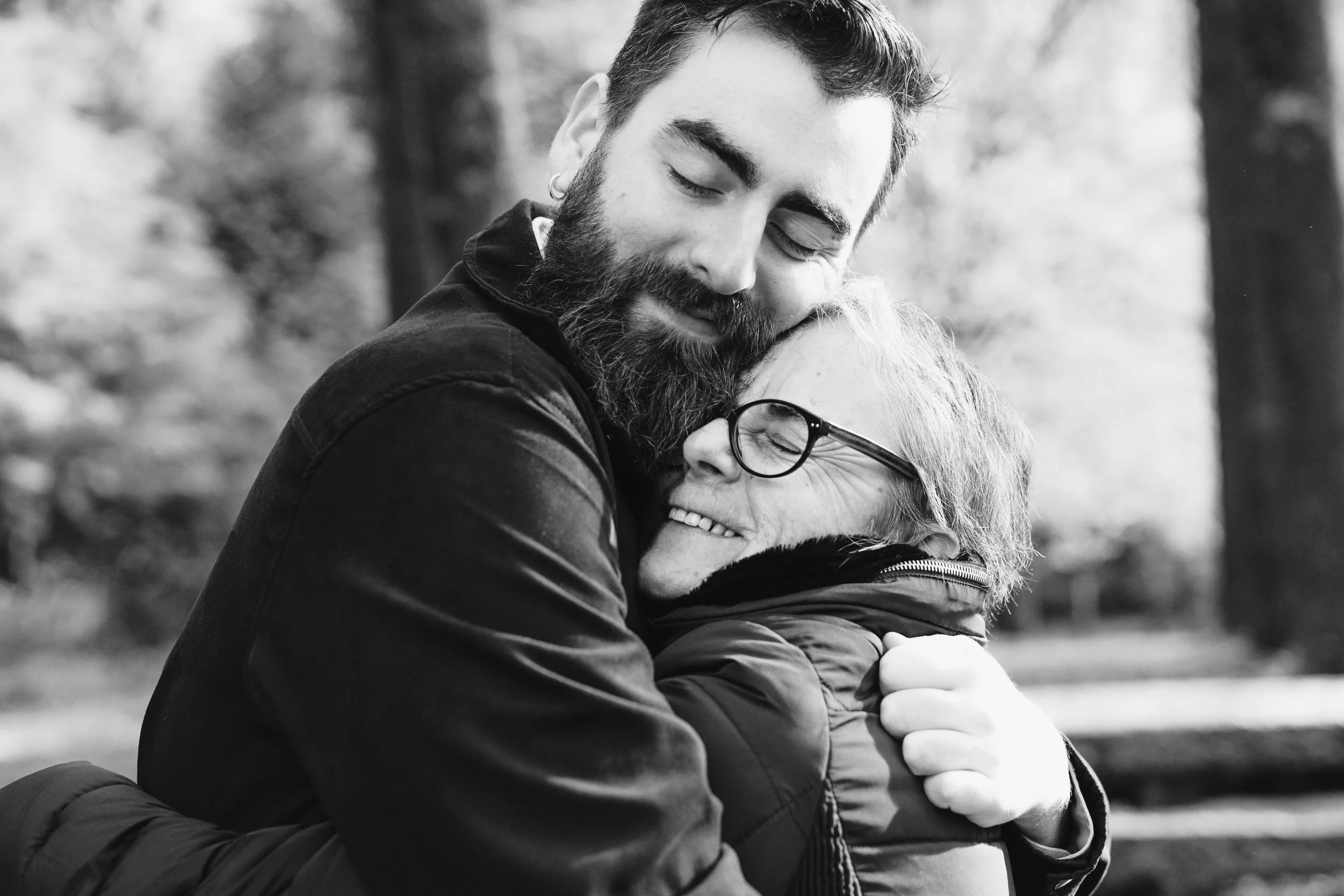
The person you care for matters enormously.
So do you.
There is a life inside all of this that is still yours.
A body that deserves moments when it isn't anticipating what someone else will need.
A self that can love deeply without disappearing entirely into the work of loving.
If something in what you've read here feels familiar, let's talk. Tell me what's happening. I'll listen. We'll ask some questions and see whether Cellular Healing is the right next step for you.
No promises. No pressure. No need to know before we begin.
Curiosity is enough
Private conversation with Nina Frankel · Sessions available on Zoom